What Is Beacon Hub
Beacon Hub is a virtual Wi-Fi penetration testing lab for learning and practicing wireless security
in a safe local environment. It runs inside a lightweight Debian virtual machine and uses Linux
wireless simulation (mac80211_hwsim), so you can create access points, clients,
captures, and attacks without buying external Wi-Fi adapters or testing on real networks.
The project is built for education, practice, and demonstrations. It is not a production tool — it is a lab environment meant to help you understand how Wi-Fi attacks work under the hood.
Why Virtual?
Learning Wi-Fi security usually needs extra hardware — compatible chipsets, antennas, and a safe test network. Beacon Hub keeps everything local and virtual. The virtual networks created inside the VM are not visible to nearby phones, laptops, or routers. They exist only inside your machine.
This means you can practice deauthentication, handshake capture, WEP cracking, and more without touching any real network or breaking any laws about unauthorized access.
What You Can Test
Beacon Hub currently supports practical lab workflows for:
- WPA2-PSK networks — create, connect, capture handshake
- WEP networks — capture IVs and practice cracking
- WPA2-Enterprise networks — RADIUS-style authentication
- Virtual access points and virtual clients
- Monitor mode adapters
- Deauthentication testing
- WPA handshake capture and extraction
- WEP IV capture and cracking workflow
- Packet capture and live lab logs
- Guided training scenarios
Future versions are planned to support MITM, spoofing, session hijacking, evil twin portals, captive portal workflows, and more advanced scenarios.
How It Works
Beacon Hub combines several Linux tools to create a fully virtual Wi-Fi environment:
| Component | Role |
|---|---|
| Vagrant | Creates and manages the Debian VM. One vagrant up command builds the entire lab. |
| VirtualBox | Runs the Debian VM on your machine. |
| mac80211_hwsim | Linux kernel module that creates virtual Wi-Fi radios. They behave like real adapters but don't send signals outside your computer. |
| hostapd | Creates virtual access points (WPA2, WEP, open, enterprise). |
| dnsmasq | Assigns IP addresses to connected virtual clients. |
| wpa_supplicant | Simulates Wi-Fi clients connecting to the virtual networks. |
| aircrack-ng | Tools for capture, deauthentication, WEP and WPA handshake cracking. |
The web interface (served from the VM) lets you deploy networks, manage clients, and view captures through a browser — no need to SSH in and run commands manually.
Screenshots
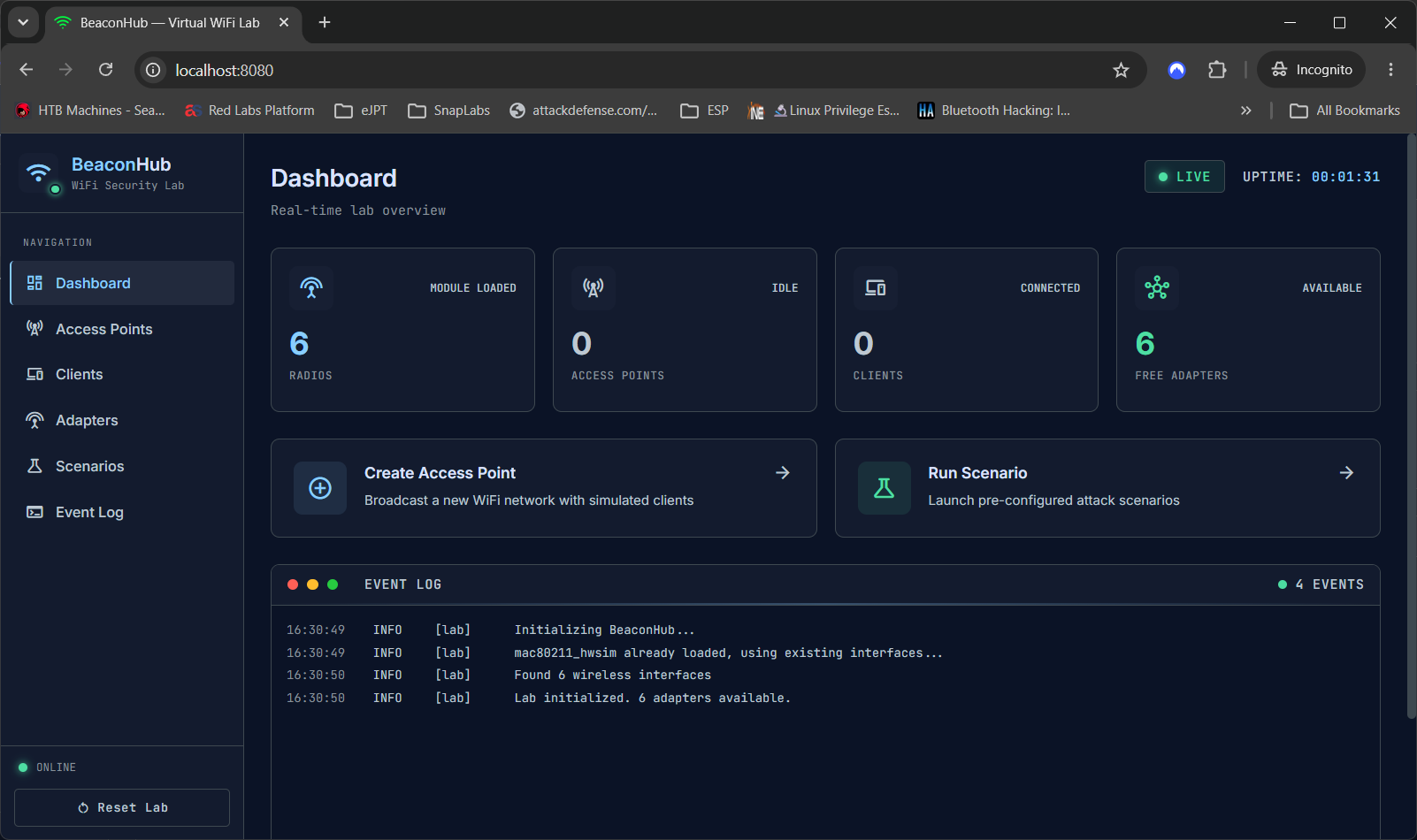
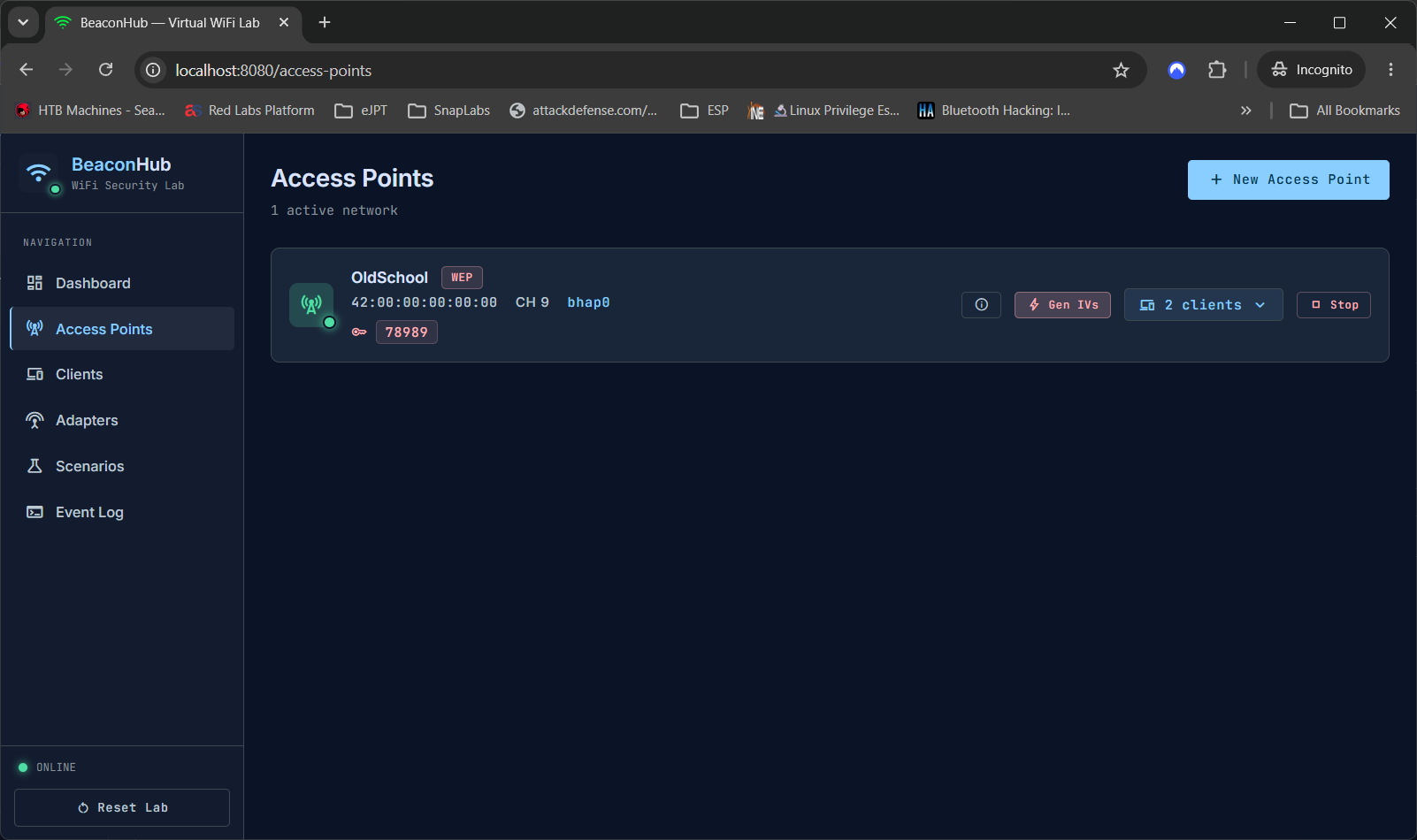
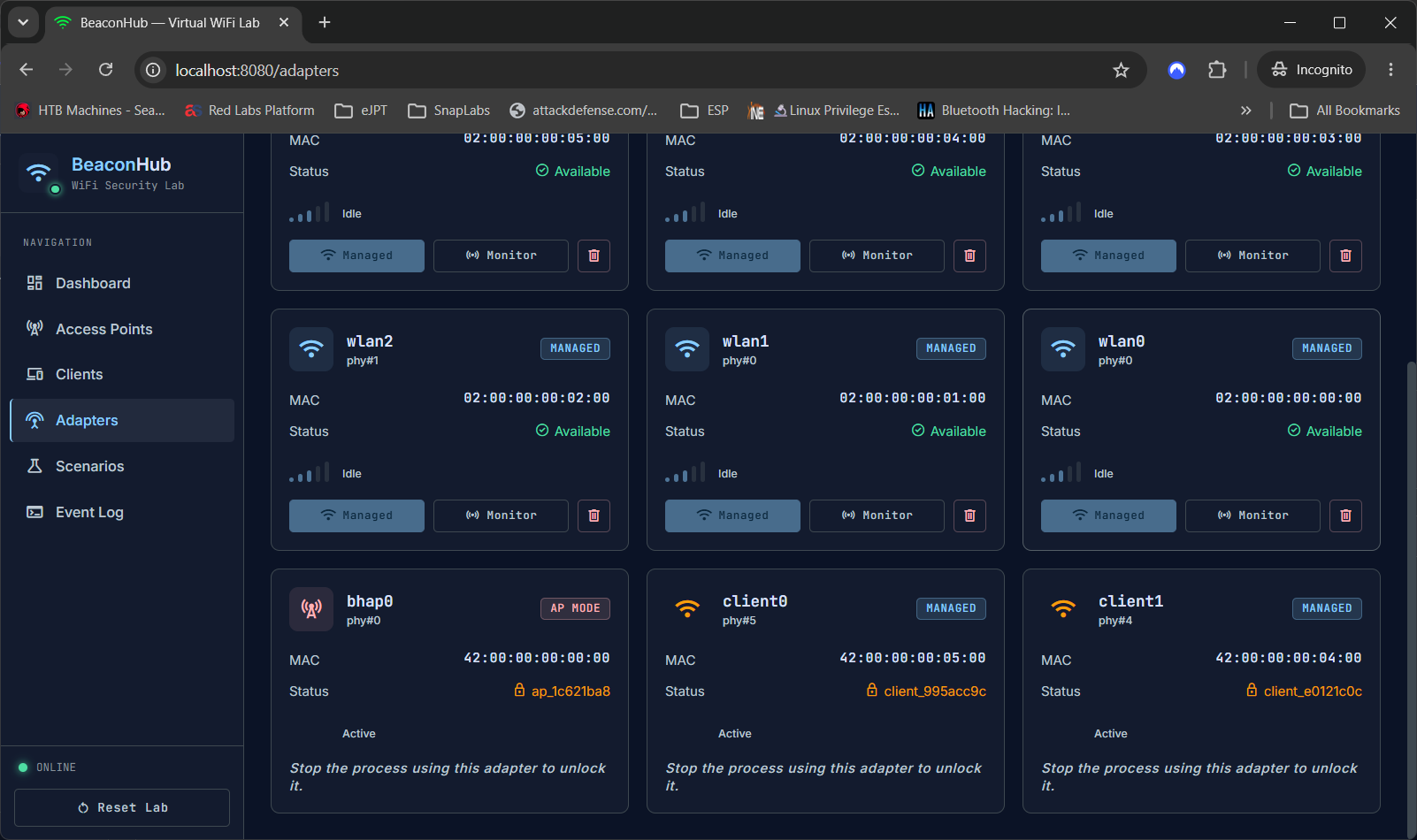
GitHub Repo
The full source code, setup instructions, and documentation are available on GitHub: